Job Referral for Apna
How we helped blue and grey collar job seekers easily discover and build a meaningful professional network
Role
Senior Product Designer
Scope
User Research • Product Design • Prototyping • Usability Testing
Platform
Android
PRoject Duration
2 weeks (2022)
Status
Shipped (No longer live)




About Apna
Apna is a professional networking and job search platform connecting job seekers with employers across India. Its users span blue- and grey-collar workers as well as more experienced professionals, making it a platform built around both finding work and building professional connections.
At the time, Apna was expanding beyond job discovery into a broader professional community. The opportunity was to explore whether existing connections could also help people discover and access better job opportunities through referrals.
Apna was evolving from a job marketplace into a professional network…
As Apna expanded its community features, a new opportunity emerged: helping people use the professional connections they already had to discover jobs and get referred.
But referrals typically happened outside the product — through friends, former colleagues, WhatsApp groups, and personal conversations.
The question was whether Apna could make that process easier and more accessible.
The big questions…

Are these job seekers interested in building a professional network?
What motivates them to join and actively use a professional network?
What are their expectations from such a network?
How can we foster a sense of community and support among our users?
Our initial hypothesis was grounded in the assumption that…
…job referrals already happened through informal networks. But the process was fragmented, difficult to navigate, and dependent on who you knew.
We wanted to understand how people currently found referrals, what made them comfortable reaching out to someone, and whether a product could make that process easier without making networking feel transactional.
How do people actually find job referrals?
We spoke to job seekers across different stages of their job search to understand how they discovered opportunities, who they turned to for referrals, and what made asking for help difficult.
We looked at differences across:
people actively looking for jobs vs. already applying
freshers vs. experienced workers
blue- and grey-collar roles
people with strong professional networks vs. limited connections
65%
🚀 users actively search for job referrals offline
~80%
😥 users face difficulties in obtaining them
50%
🔎 struggle to find the right connections
41%
💬 users need help deciding on the right job
What made the offline referral process difficult?
Referrals were already happening but mostly through personal relationships and one-off conversations. That created a few barriers:
Your network determined your opportunities
People with fewer professional connections had fewer ways to discover relevant referrals.
Asking someone for help felt uncomfortable
Users often hesitated to approach people they didn't know well enough.
Finding the right person wasn't easy
Even when users knew someone at a company, they often didn't know whether that person could actually help.
The process depended on the other person
A referral only moved forward if the connection was willing and able to respond.
We realised that the strongest opportunity wasn't to create another way to search for jobs.
It was to help people make better use of the network they already had.
Instead of starting with a job and asking, “How do I get referred?”, the experience started with the user's network — showing them relevant companies, connections and opportunities they could realistically act on.

Discovering opportunities through your network
The first challenge was making the user's existing network useful without making the experience feel like another generic job feed.
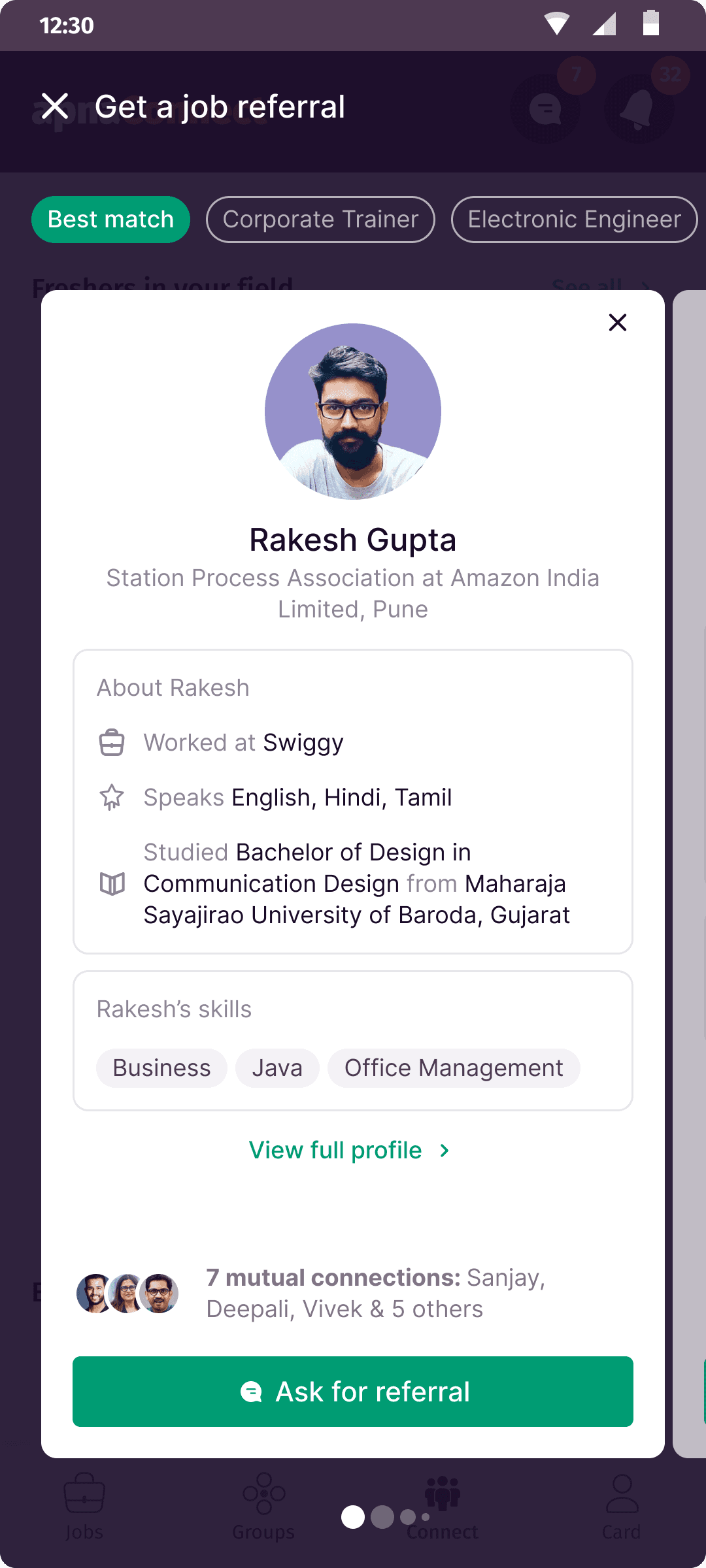
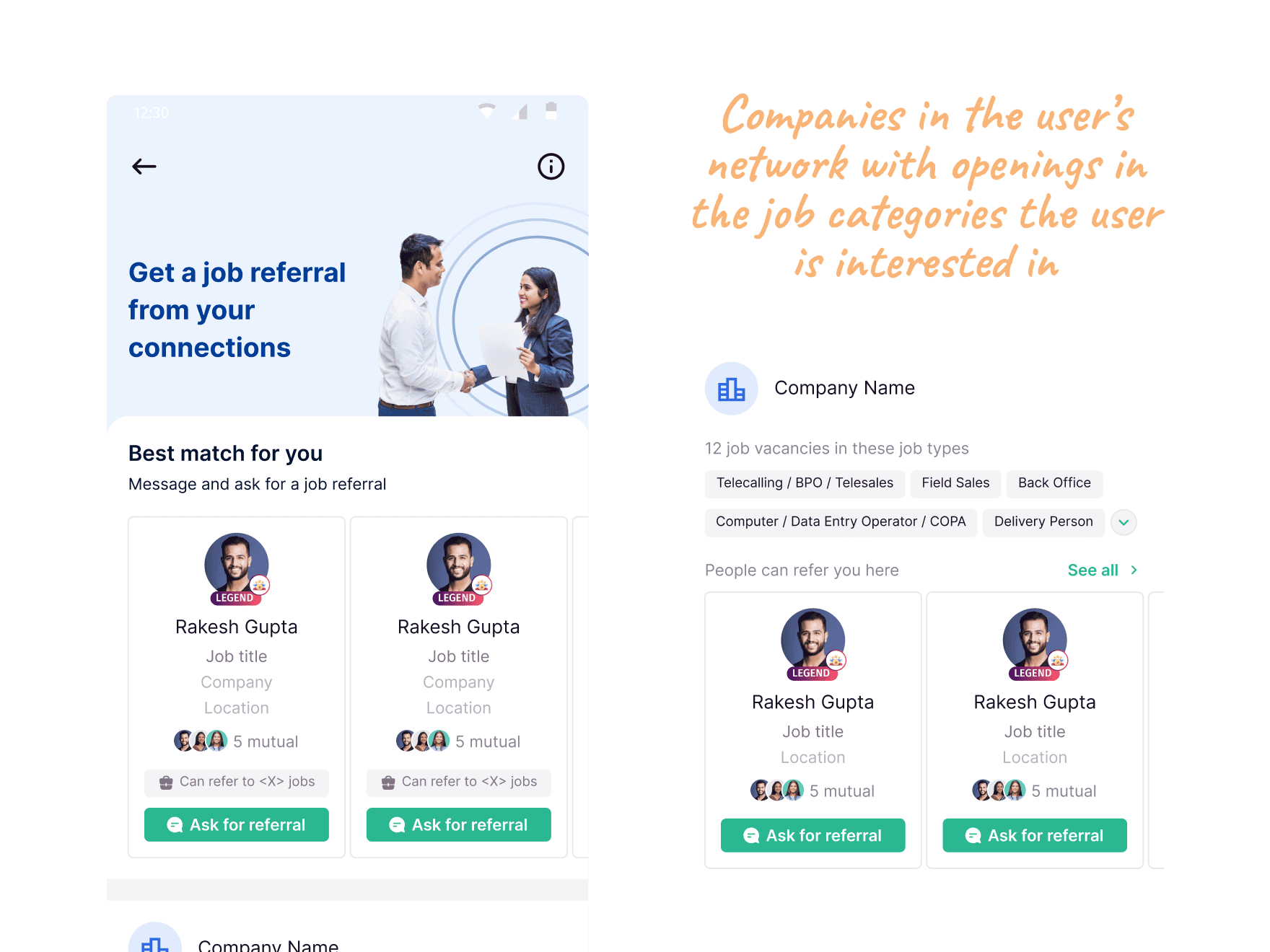
I explored how we could surface companies and opportunities through people the user already knew, while still keeping the focus on finding a job. This meant thinking through what information was useful at a glance — who the connection was, how they were connected, and whether they could potentially help — so users could quickly identify opportunities worth pursuing.
Network-first job discovery
Rather than treating connections as a separate networking feature, I brought them directly into the job discovery experience.
Users could see which jobs were connected to their network and understand where they had a potential path to a referral. The challenge was balancing relevance with information density — showing enough context to make a connection meaningful, without turning every job card into a wall of relationship data.
Making the first message easier
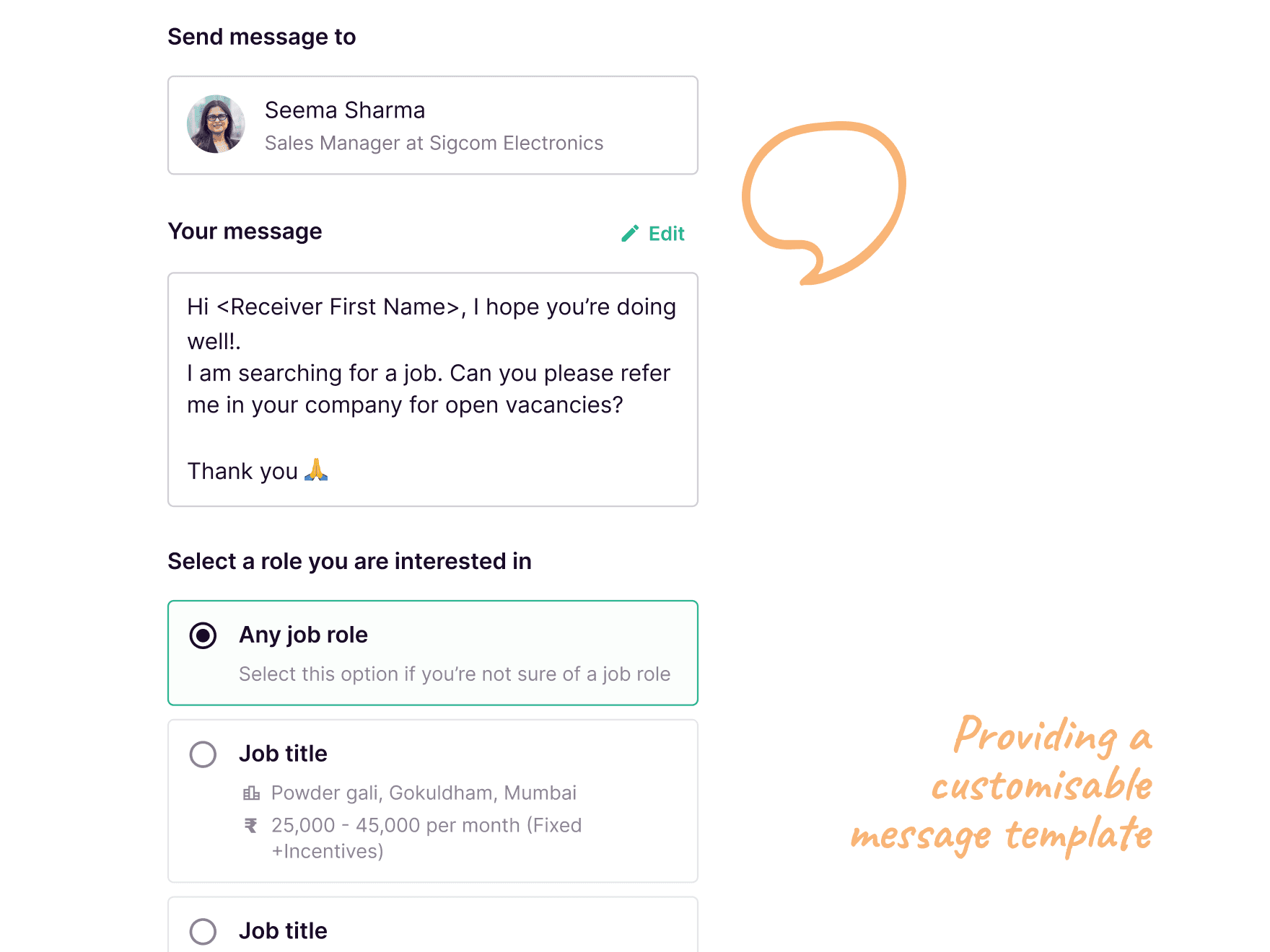
One of the biggest friction points wasn't finding someone — it was knowing what to say.
Asking a connection for a referral can feel uncomfortable, particularly when the relationship isn't very strong. I designed the messaging flow to reduce that hesitation by giving users contextual prompts and suggested messages they could personalise, rather than forcing them to start with a blank text box.
The goal was to provide enough structure to get the conversation started while still keeping the interaction personal.
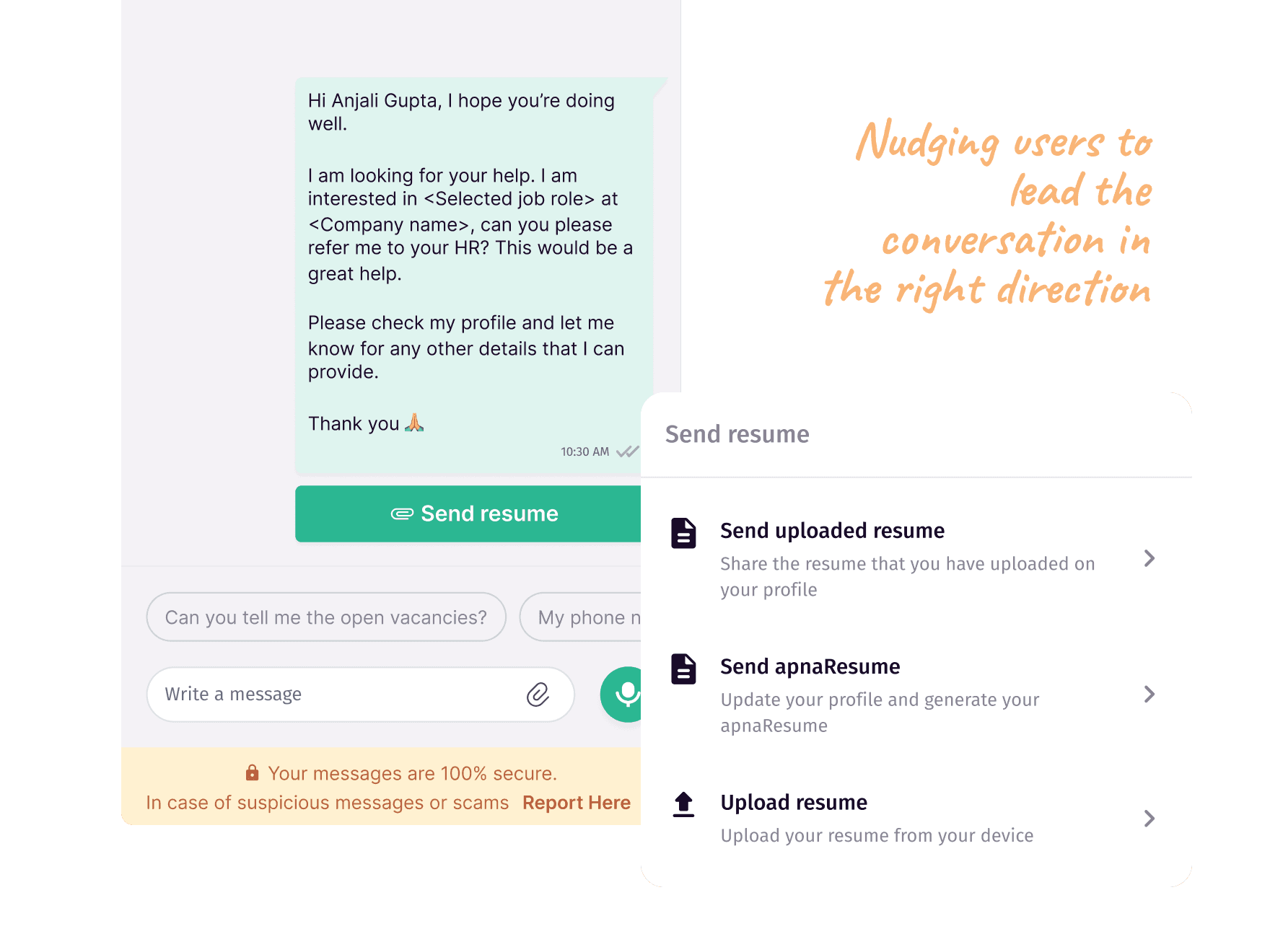
Helping conversations move forward
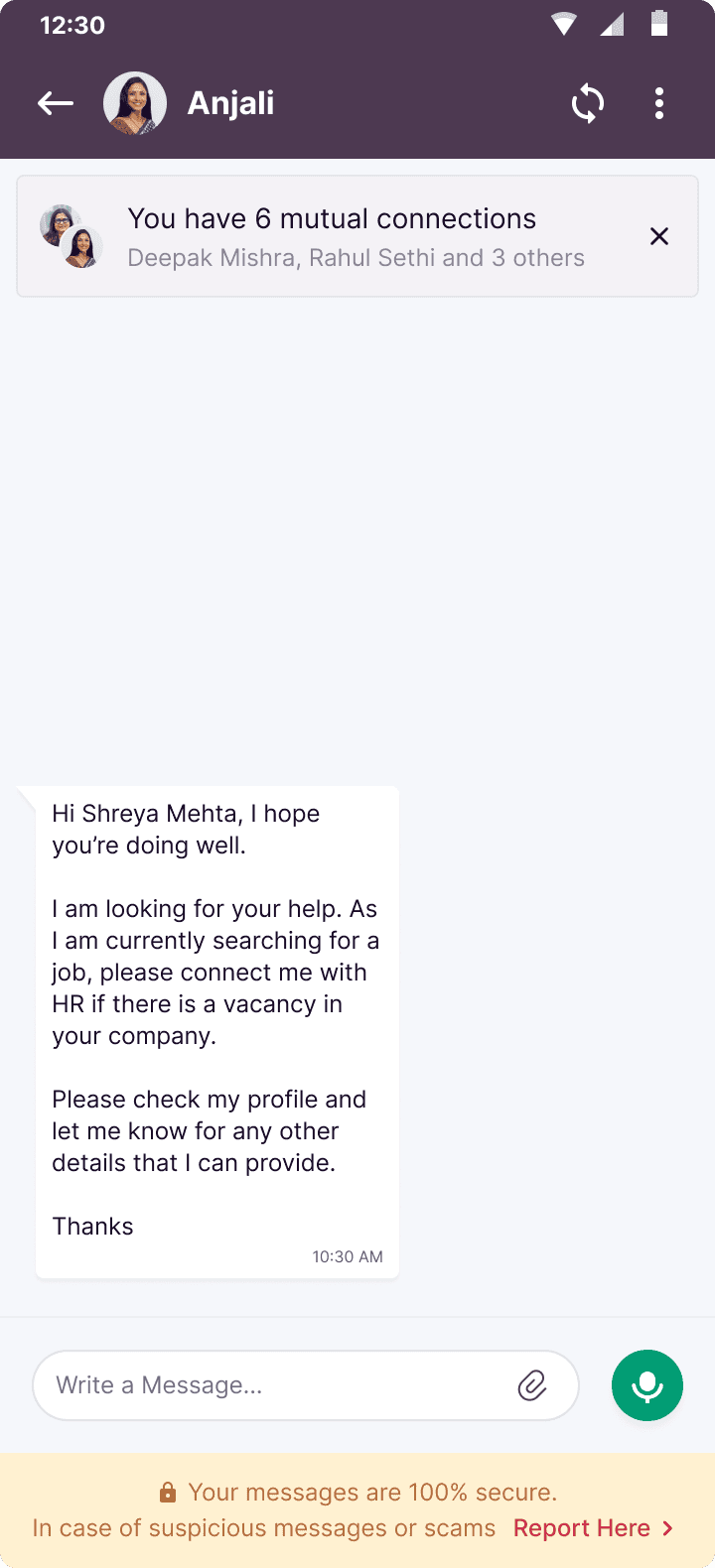
Getting a referral request sent was only the beginning. The next challenge was helping users understand what to do when the conversation moved beyond the initial request.
I explored contextual actions and suggested responses that could help users navigate common moments in the conversation — whether they needed to follow up, share more information, or understand what happened next. This helped turn the feature from a one-time referral request into a more complete interaction.
If I have to take one thing away from this experience…
Overall, the job referral feature aims to simplify the process of finding job referrals and build a community of professionals who can help each other find the right job. And boy, did we see some super results:
There’s more to the story than what’s on this page. Reach out at anjalidarbha.work@gmail.com if you’d like to see the full case study.