Money20
Designed a gamified fintech learning platform that makes financial education more engaging and accessible to young people


The need for financial literacy among the youth
As financial products become more accessible, young people are expected to make increasingly complex financial decisions earlier in life. Yet traditional approaches to financial education often struggle to make these concepts relatable and engaging.
What we learned about how young people learn finance
Secondary research allowed us to delve deep into the existing market, understand user behaviors, and identify unmet needs.
🔻
Financial literacy remains low among young people in India.
👌
Real-life simulations make financial concepts easier to understand and apply.
🥱
Traditional financial content often feels complex and intimidating, making finance seem boring and difficult to approach.
👨👩👧
Early exposure can make financial concepts easier to understand and build confidence over time.
Bringing gameplay into financial education
The idea was to turn financial concepts into something users could learn by doing. Rather than presenting finance as a series of lessons, the experience uses simulations, decisions, rewards, and consequences to make concepts easier to understand and remember.
The goal was to…
Make financial concepts easier to understand and connect to real-life decisions
Help users experience the long-term consequences of financial choices
Expose users to a broader range of financial products and strategies
The visual language needed to feel closer to a game than a traditional finance product. We used a vibrant palette, bold illustrations, and playful UI elements to make the experience feel approachable while still communicating financial concepts clearly.
🟣
Purple conveys wealth and luxury, making it a natural fit for a financial product. It also introduces the creativity and playfulness of the gamified experience.
🔵
Blue adds a sense of trust and reliability—important qualities when dealing with personal finance.
🟡 🟢
Yellow and green draw attention to important actions, buttons, and badges while helping users understand what matters most.
This strategy is common in gaming apps, where color is used not just to engage users but to direct their actions and reward progress.
The visual elements like badges, icons, and buttons are all sleek and have a bit of a 3D effect, giving a sense of tactile interaction. This is again very reminiscent of video game interfaces, which often use depth and shadow to make the user feel like they're interacting with real objects. This can be particularly engaging for a younger audience, bridging the gap between a game and a learning tool.



A guided introduction to financial products
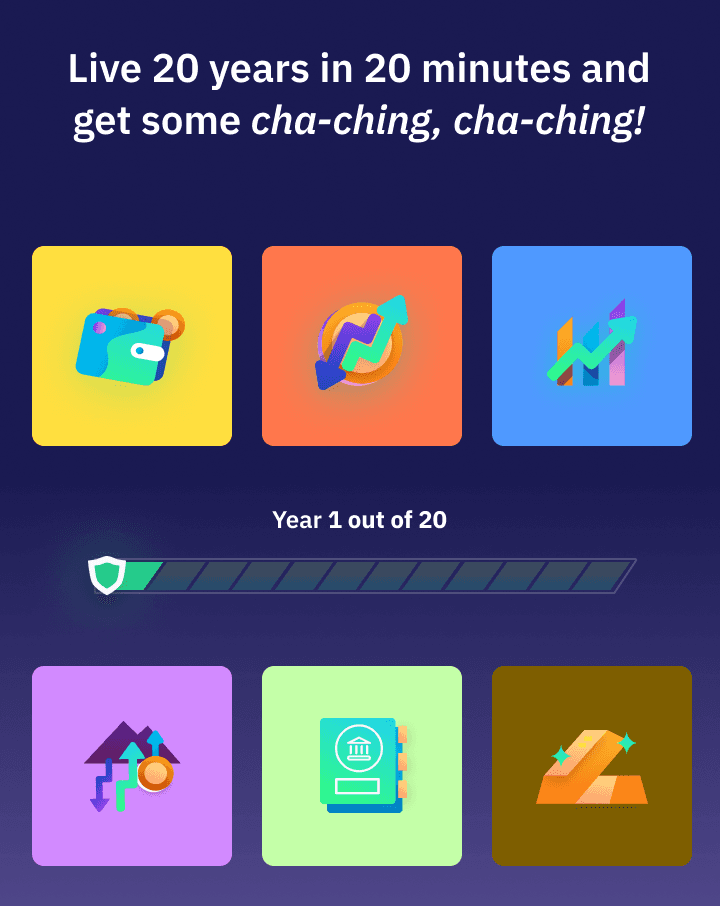
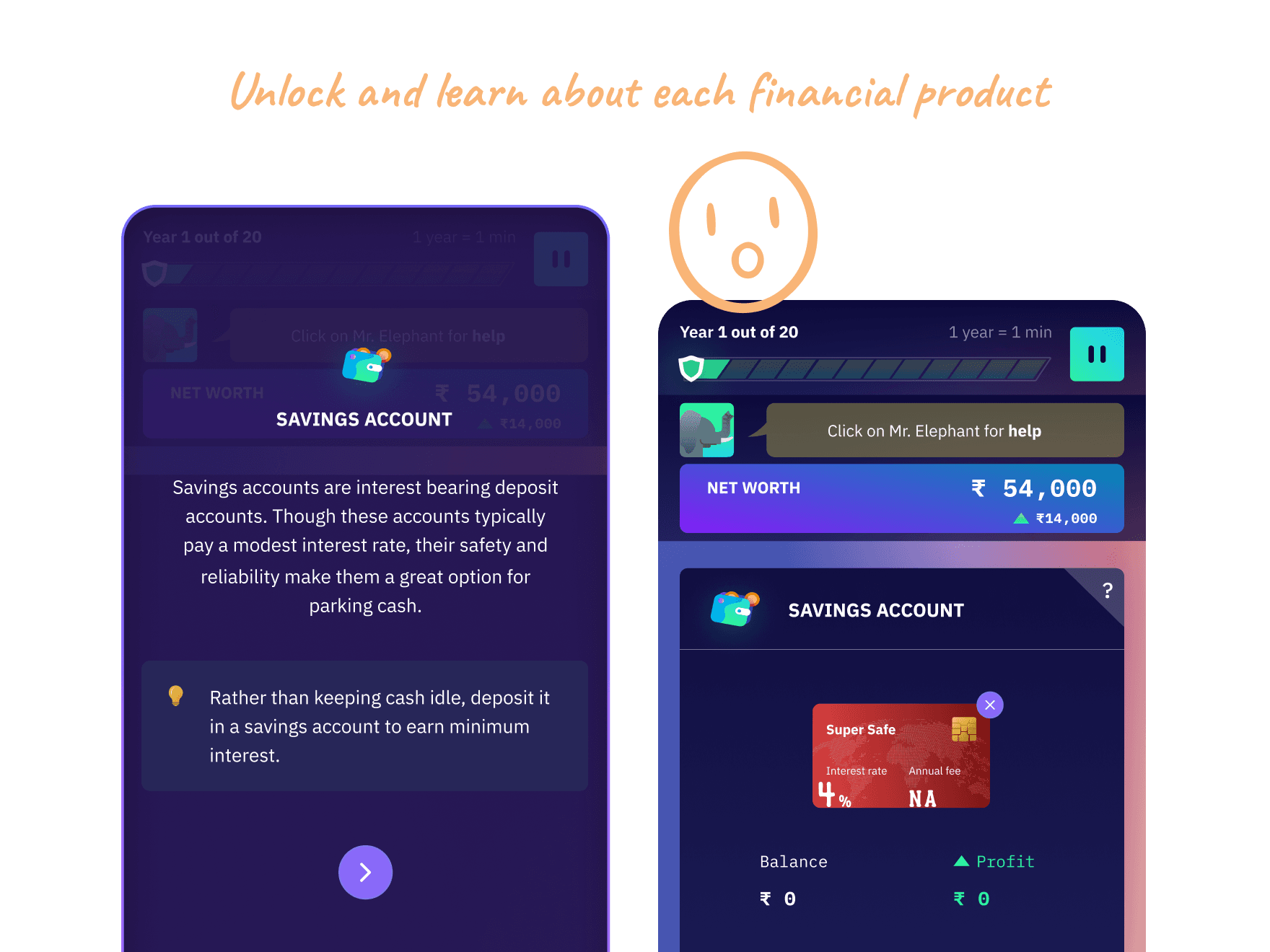
Financial products can feel intimidating when introduced all at once. We therefore chose to gradually unlock them as players progress through the game, giving them a short, contextual introduction before they encounter each product. This keeps the learning curve manageable while making each new concept feel like part of the game.
Real-life events and consequences
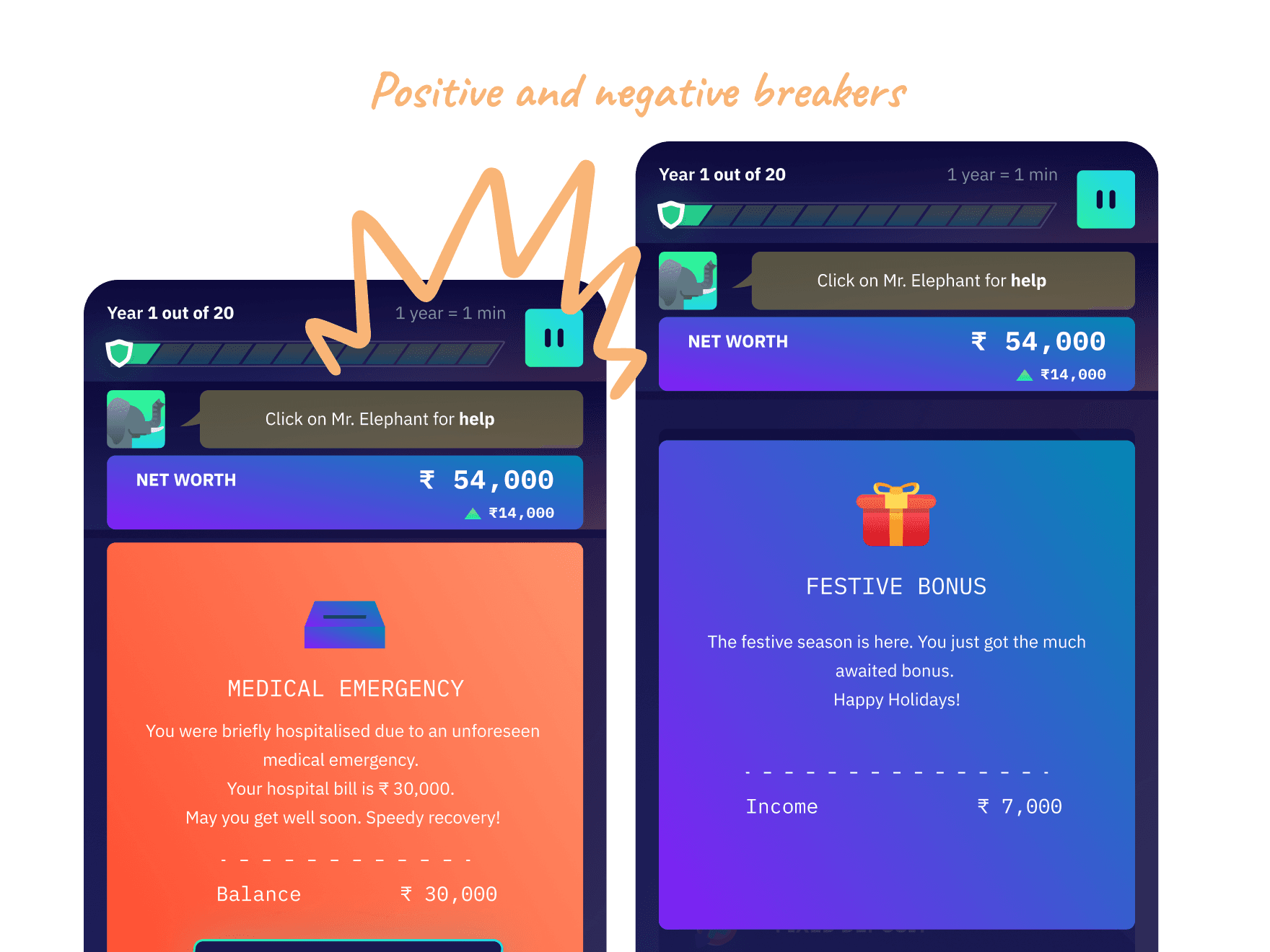
Financial decisions are rarely made in isolation, so we introduced unexpected events that affect the player's financial situation. From medical emergencies to festive bonuses, these scenarios help players understand how real-life circumstances can change their finances—and why planning for them matters.
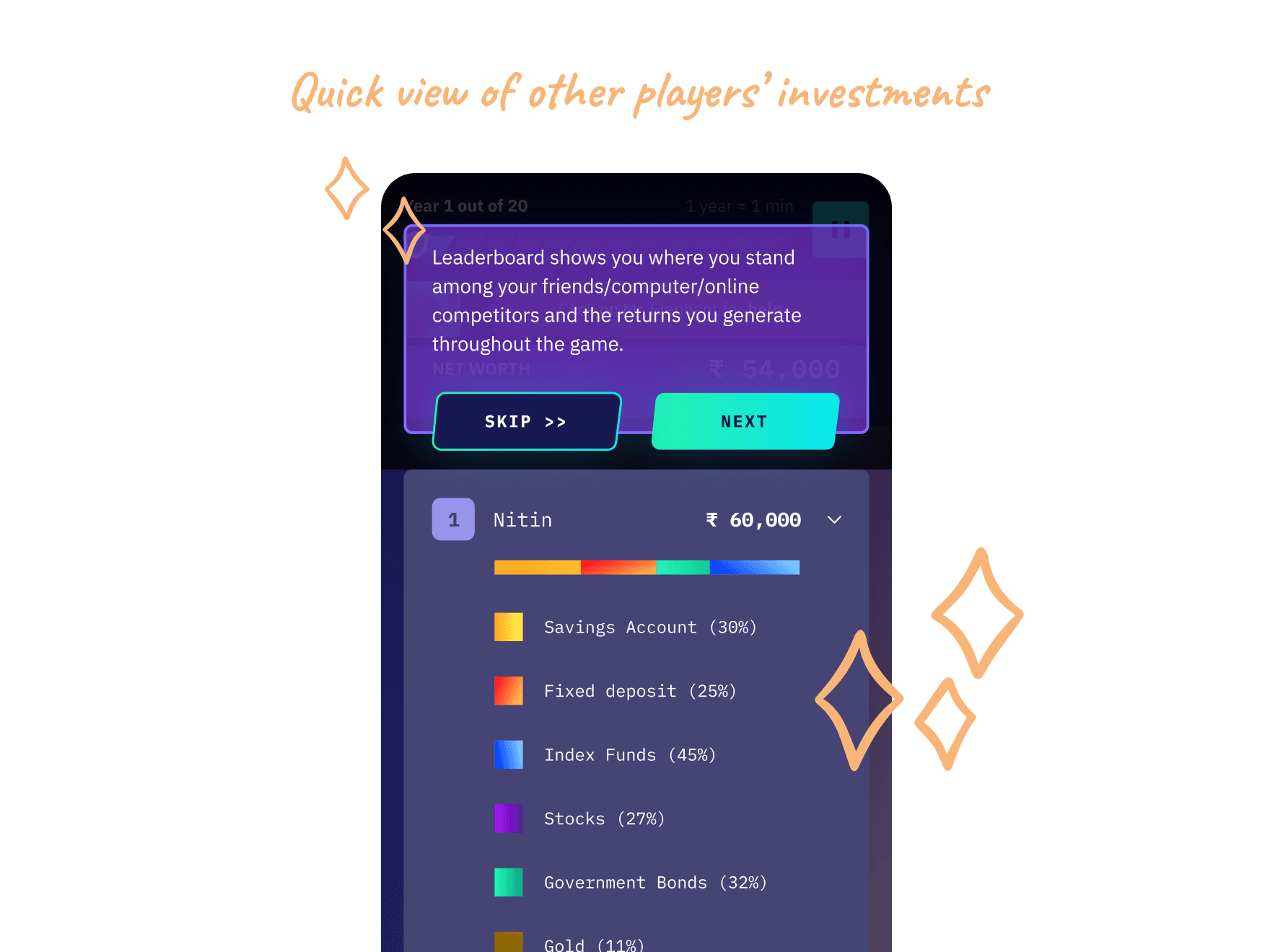
Learning from other players
We wanted players to understand that there isn't a single way to manage money. Showing how other players distribute their investments gives them a point of reference, encourages comparison, and exposes them to financial products and strategies they may not have considered themselves.
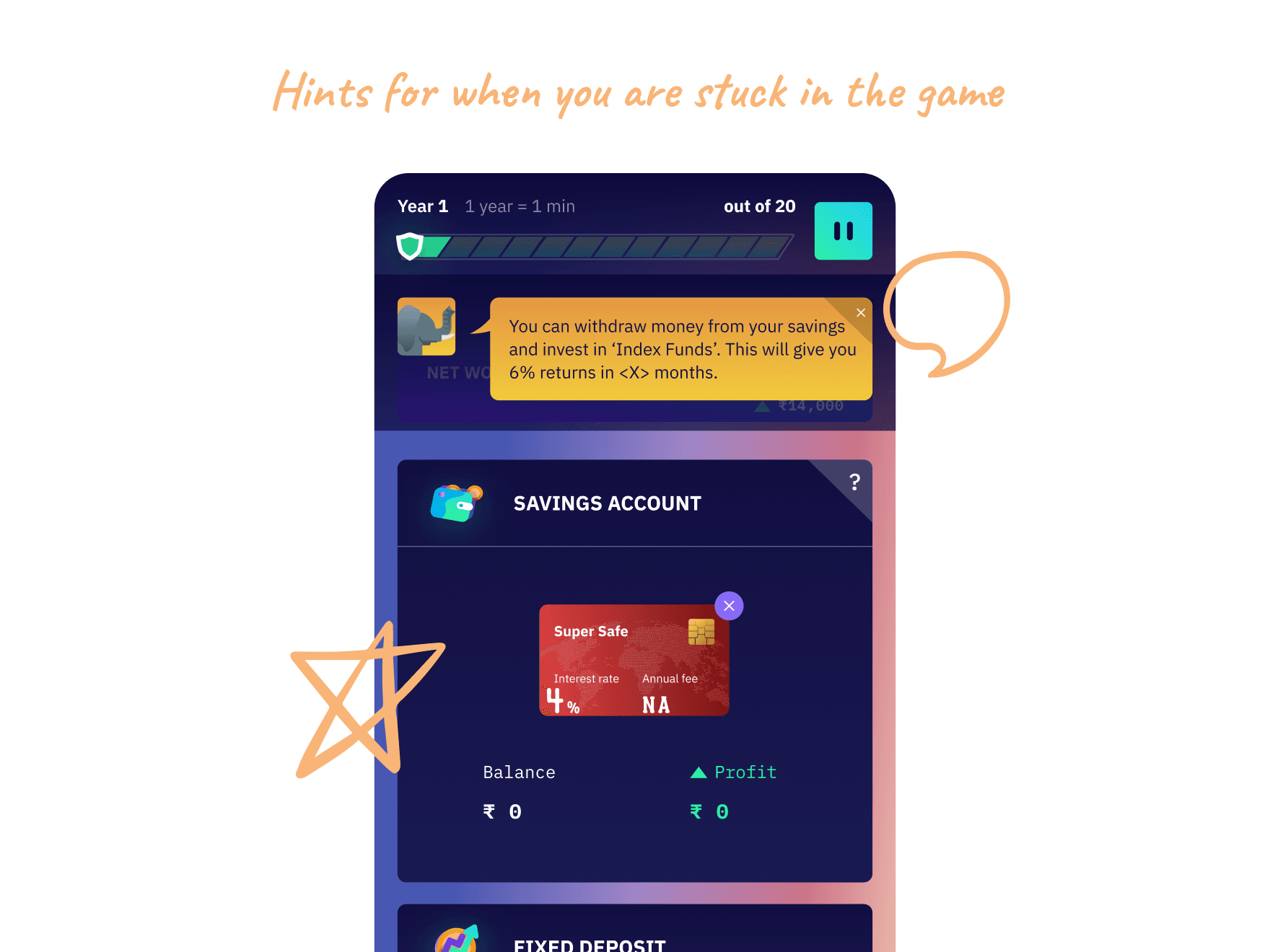
Hints when you need them
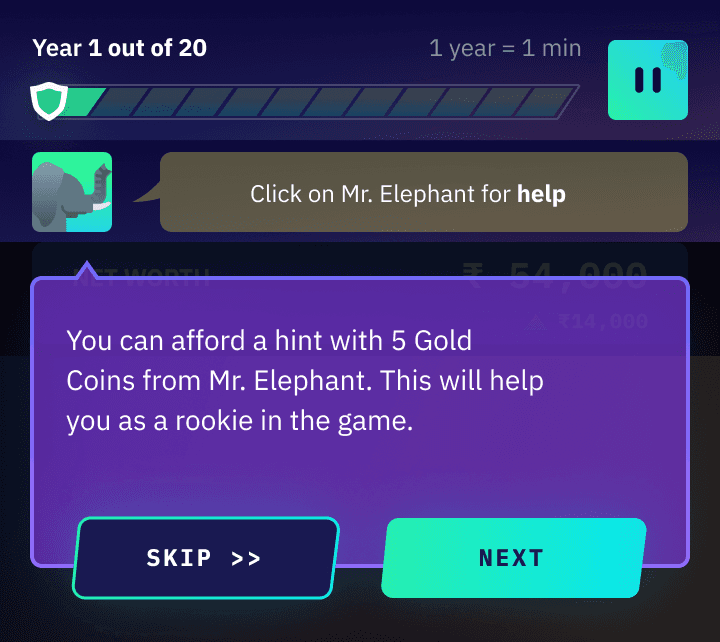
Because the game is also a learning experience, getting stuck shouldn't mean getting frustrated. We introduced contextual hints that appear when players need help, giving them just enough guidance to move forward without simply giving away the answer. This lets players learn through the decision rather than being told what to do.
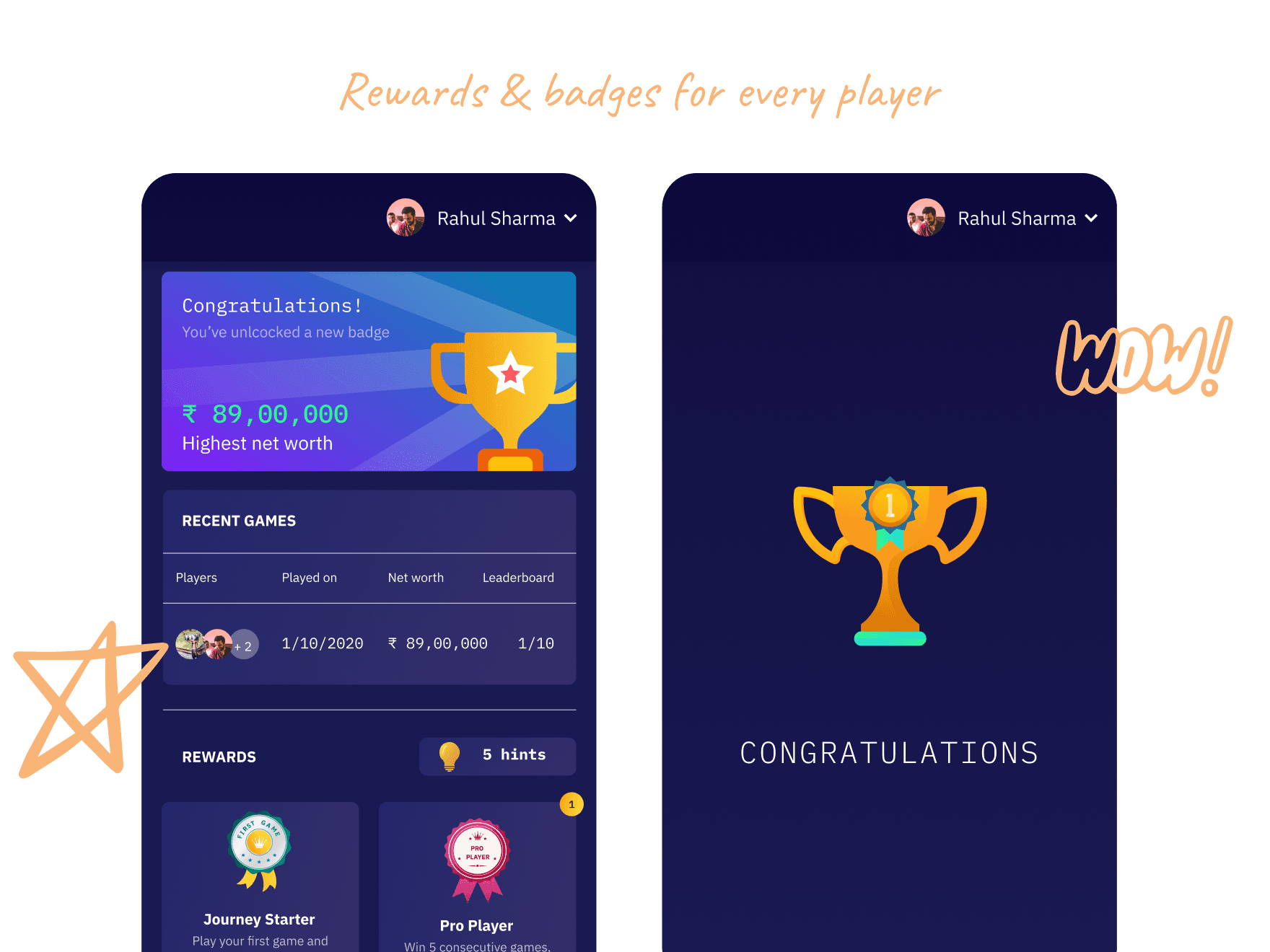
Rewards that reinforce progress
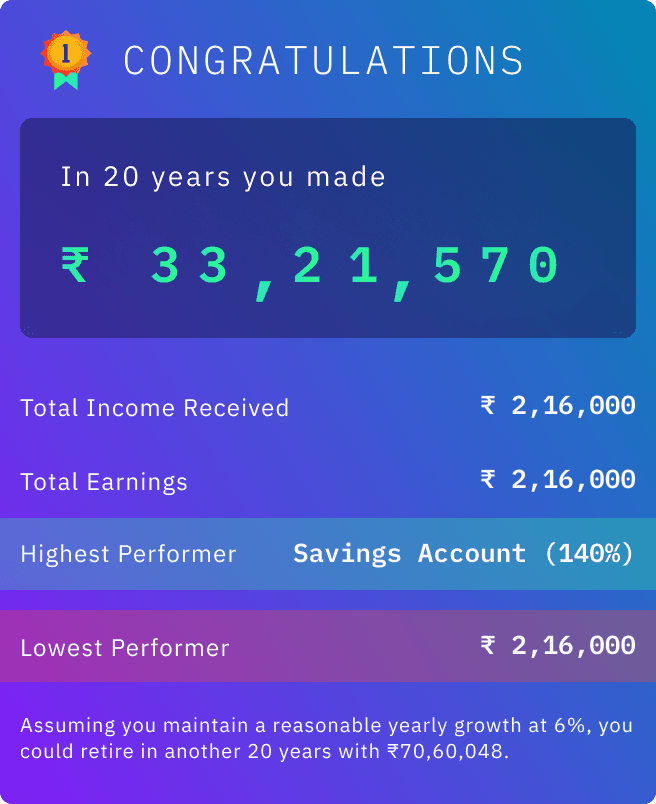
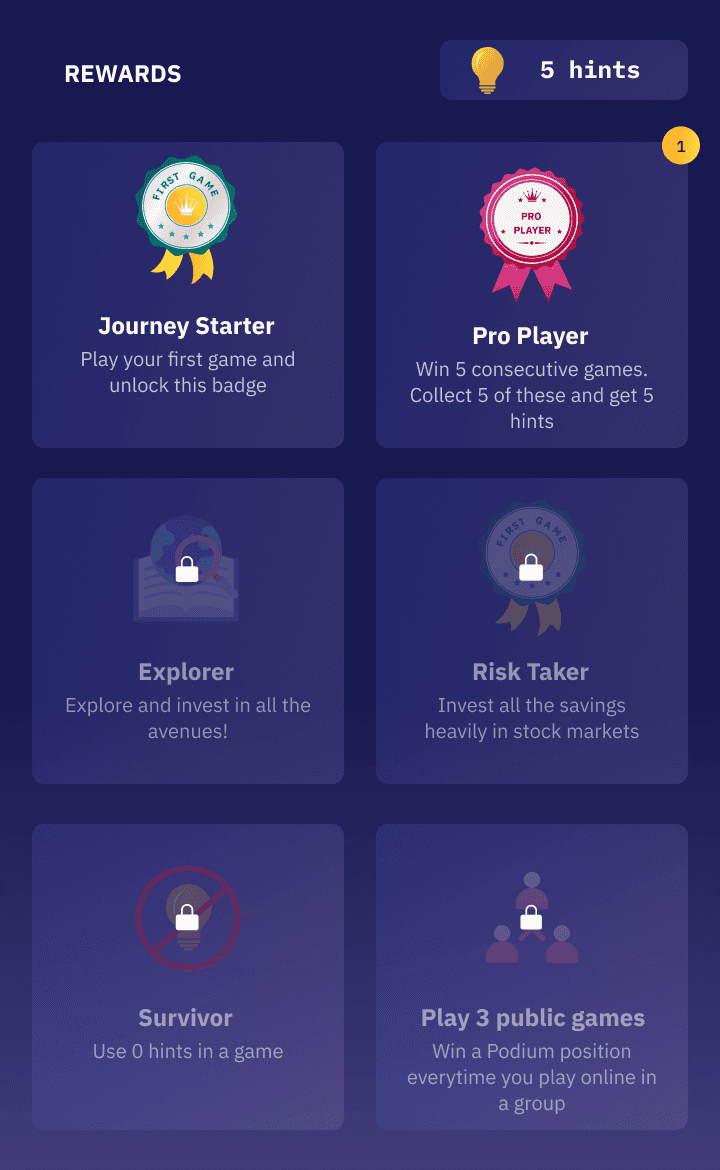
Learning about finance can feel abstract when there is no immediate sense of progress. We used rewards, badges, and milestones to make that progress visible and give players something to work towards. The goal was to reinforce continued participation without letting the game mechanics overshadow the learning itself.
What I learned…
This project showed me how much the format of information can change how people engage with it. Financial concepts that can feel intimidating in isolation became easier to understand when users could interact with them, make decisions, and see the consequences.
It also reinforced the importance of balancing engagement with clarity. Gamification can make learning more compelling, but the interaction still needs to serve the underlying concept—not distract from it.
Designed at https://www.humanx.io/