Shvaas
Designing a one-of-it's-kind mediation app that is decluttered and highly personalized and allows you to focus on what's imperative - your breath.


Overview
Shvaas is a meditation and mindfulness app built around breathwork. It guides users through short, focused exercises while helping them understand their breathing patterns and build a more consistent meditation practice.
Understanding the Landscape
Secondary research allowed us to delve deep into the existing market, understand user behaviors, and identify unmet needs.
1
Balance between guidance and flexibility
Meditation needs enough structure to help people get started, but too much guidance can make the experience feel like another task to complete. We wanted to give users direction without taking away their sense of control.
2
Cognitive Overload
Many meditation apps ask users to make decisions before they've even started — choosing programs, durations, teachers, sounds and techniques. For an experience meant to quiet the mind, this can become counterproductive.
3
De-clutter
The opportunity was to strip meditation back to its essentials. Instead of competing for attention with content and controls, the interface needed to create enough visual quiet for users to focus on the practice itself.
4
Growing emphasis on mental health and self care
Meditation was increasingly becoming part of people's everyday self-care routines rather than something reserved for dedicated sessions. This pushed us towards an experience that could fit naturally into different moments of the day.
Nearly 70% of users expressed feeling overwhelmed by too many options in meditation apps. It's like walking into a giant supermarket and not knowing what to buy!
Facing the Digital Dilemma
Meditation is meant to help people disconnect from the noise around them. Yet many meditation apps introduce their own layer of noise — notifications, content, choices and increasingly complex interfaces.
We wanted Shvaas to do the opposite.
The experience needed to feel calm from the moment it opened, helping users move from a distracted state into a focused breathing exercise with as little friction as possible.
The challenge wasn't simply to make meditation easier to understand. It was to remove enough friction that starting a session could become almost instinctive.
Whether someone had five minutes between meetings, was winding down before bed, or simply needed a moment to reset, the experience needed to meet them where they were — without asking them to think too much first.
Meditation itself is simple. The challenge was making the product equally simple.
We built the experience around the idea of quiet by design — reducing visual noise, limiting unnecessary choices, and creating a clear path from opening the app to beginning a session.
Every design decision had to answer one question: does this help the user focus, or does it compete for their attention?
To limit the excessive number of choices that ultimately cause anxiety.
To set the right environment for the user making the app functional in any situation.
Behavioural nudges to meditate whenever the user wants to
To follow an effortless, minimalistic design by reducing visual clutter
The visual language was designed to reinforce the feeling we wanted the product to create: calm, warmth and focus.
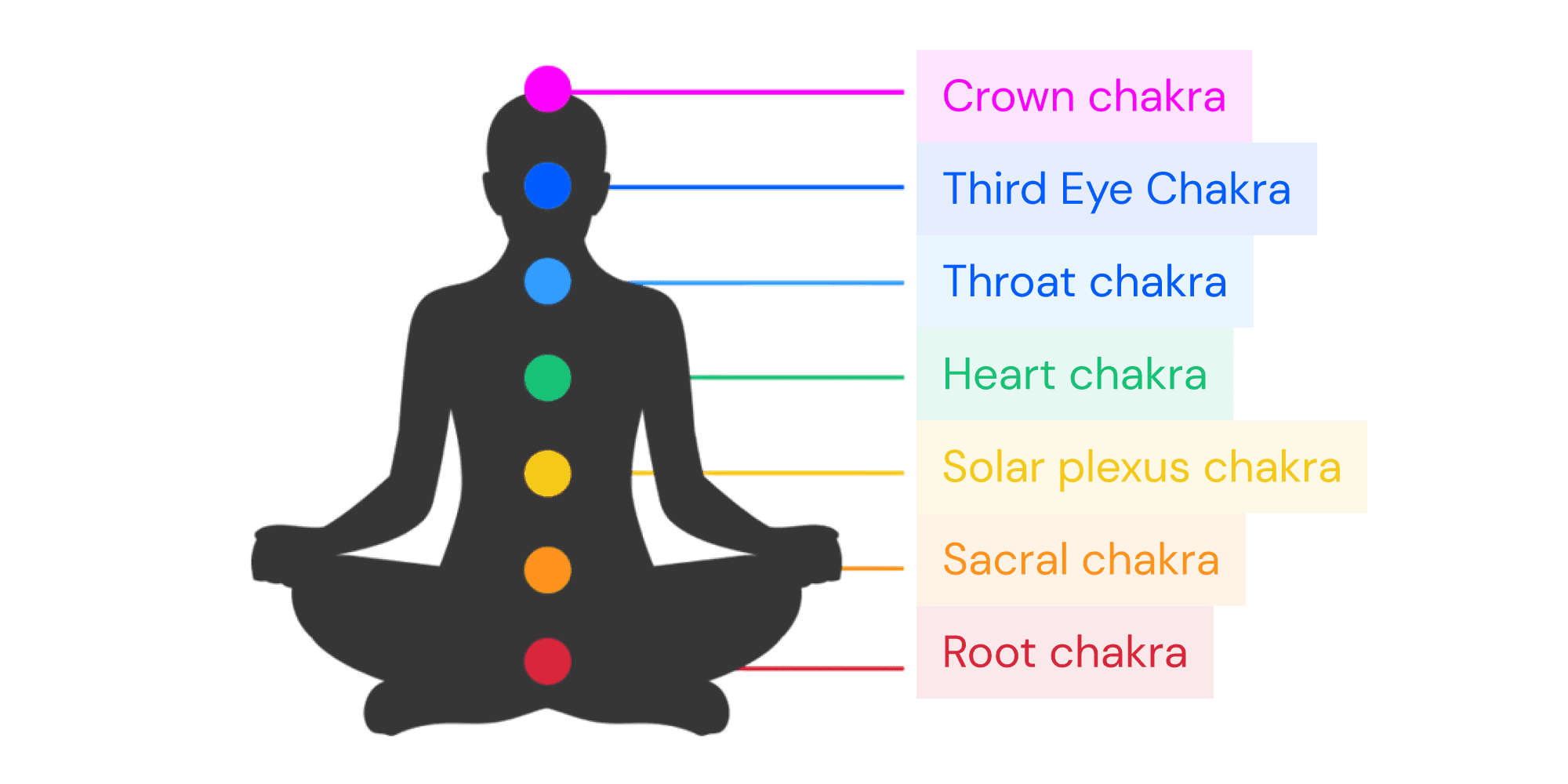
We explored the seven chakras as a starting point for the colour system, using their associated colours to create distinct visual states across the experience. Rather than using colour purely as decoration, we used it to give different exercises and emotional states their own visual identity while keeping the overall interface cohesive.
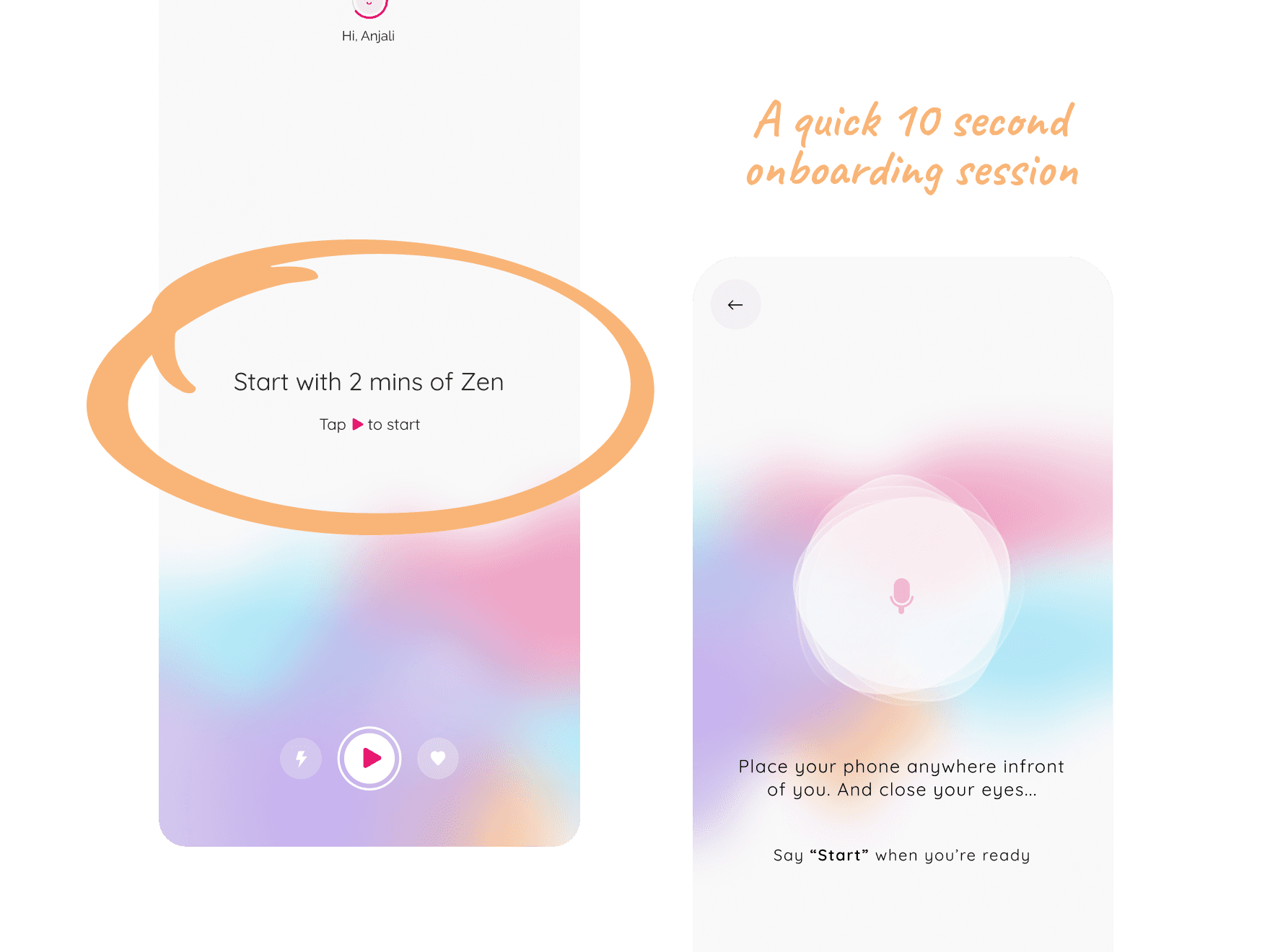
Just Breathe
We wanted the first interaction to immediately communicate what Shvaas was about — no onboarding maze, no catalogue of sessions, just an invitation to breathe.
The opening experience uses a minimal interface and gentle visual cues to help users transition into the practice before introducing any additional information or controls.
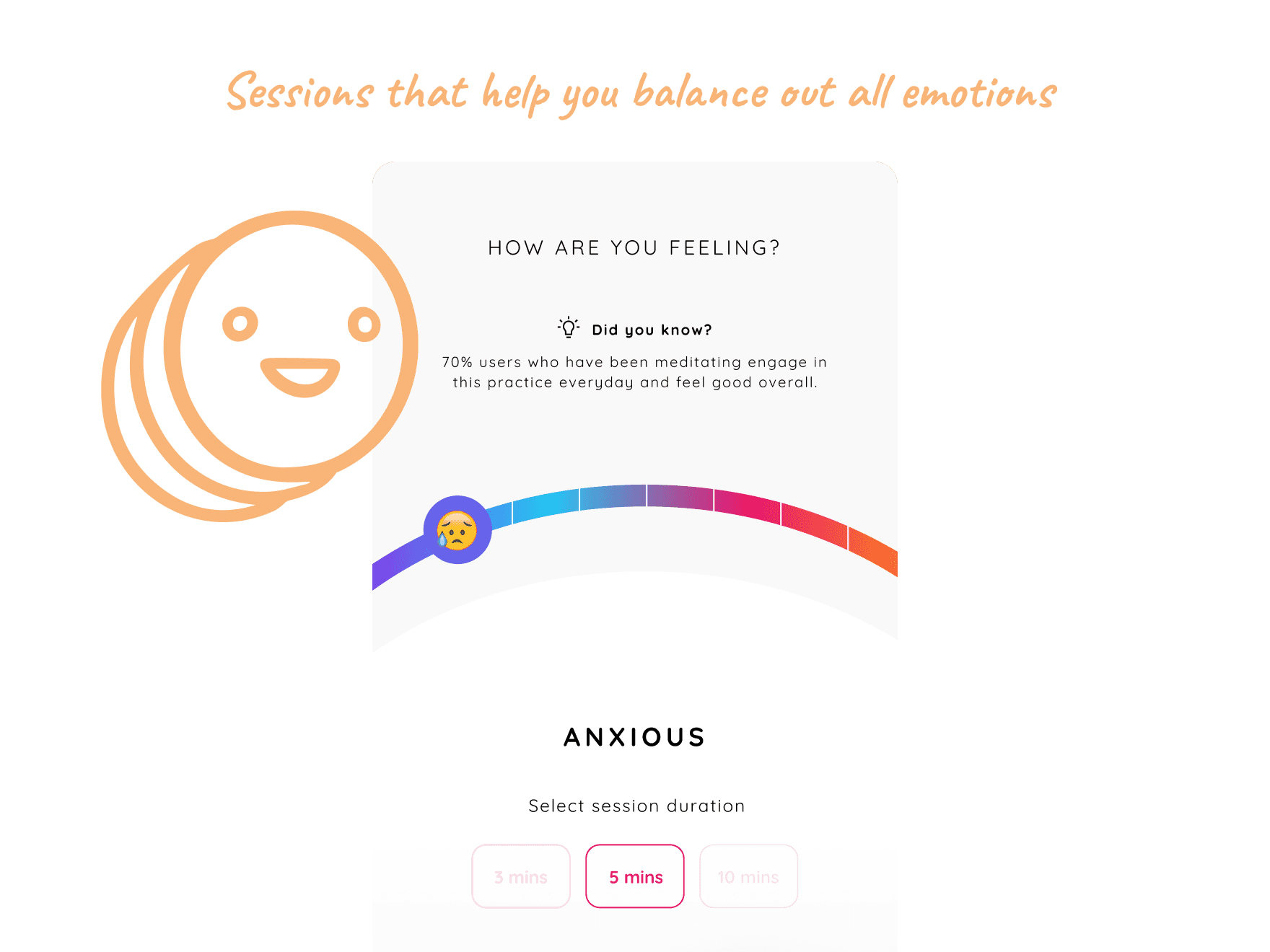
Meditate Based on How You Feel
Rather than expecting users to know which meditation technique they need, we explored starting with how they were feeling.
Users could choose an emotional state and be guided towards a session suited to that moment. This made personalisation feel natural while reducing the cognitive effort of deciding what kind of meditation to do.
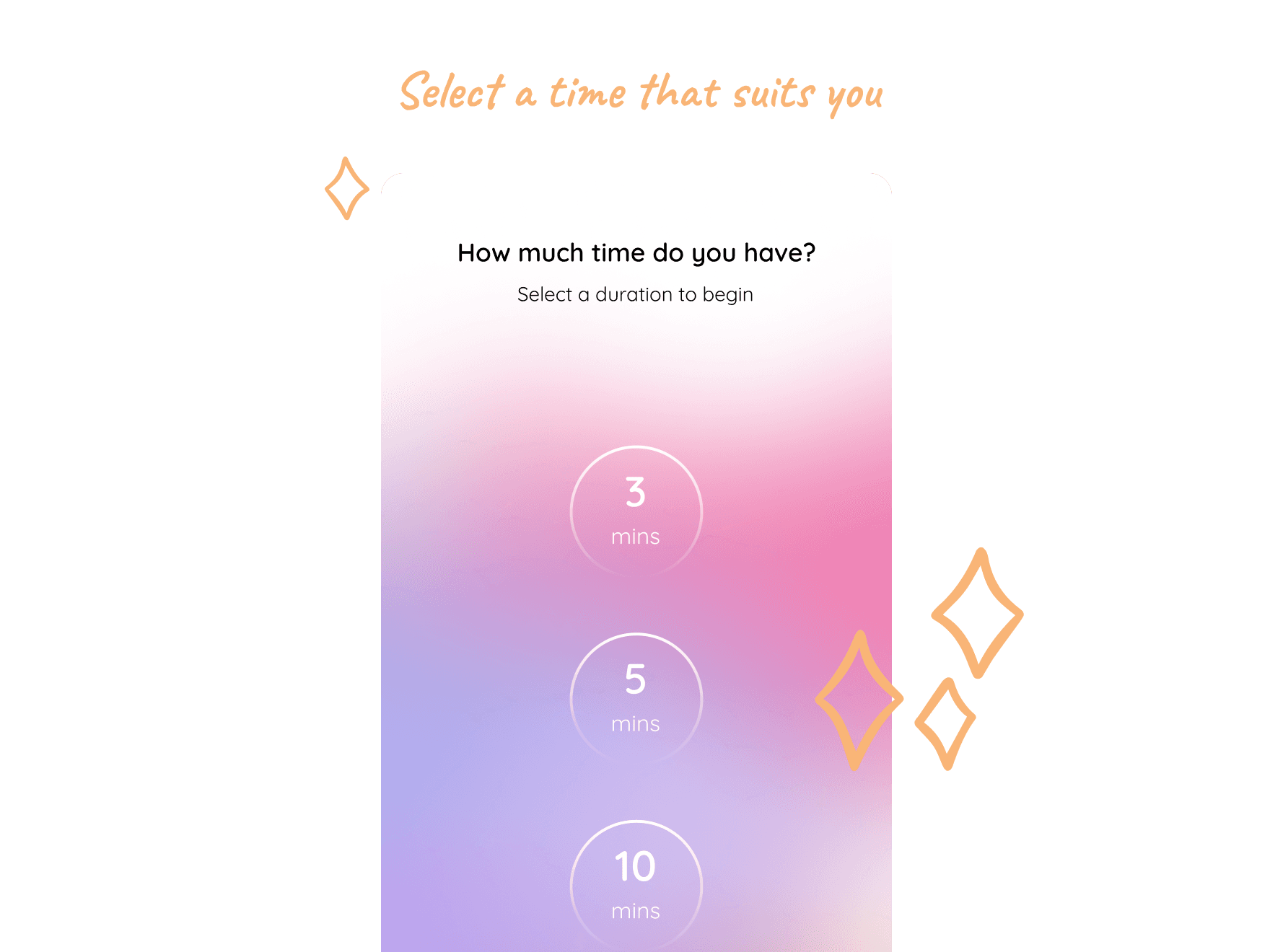
Rescue Sessions
Not every meditation session needs to be twenty minutes long. We designed short “rescue” sessions for moments when users needed to reset quickly — whether they were feeling overwhelmed, stressed or simply needed a pause.
The idea was to make meditation useful beyond a dedicated practice, by giving users something they could reach for in the middle of everyday life.
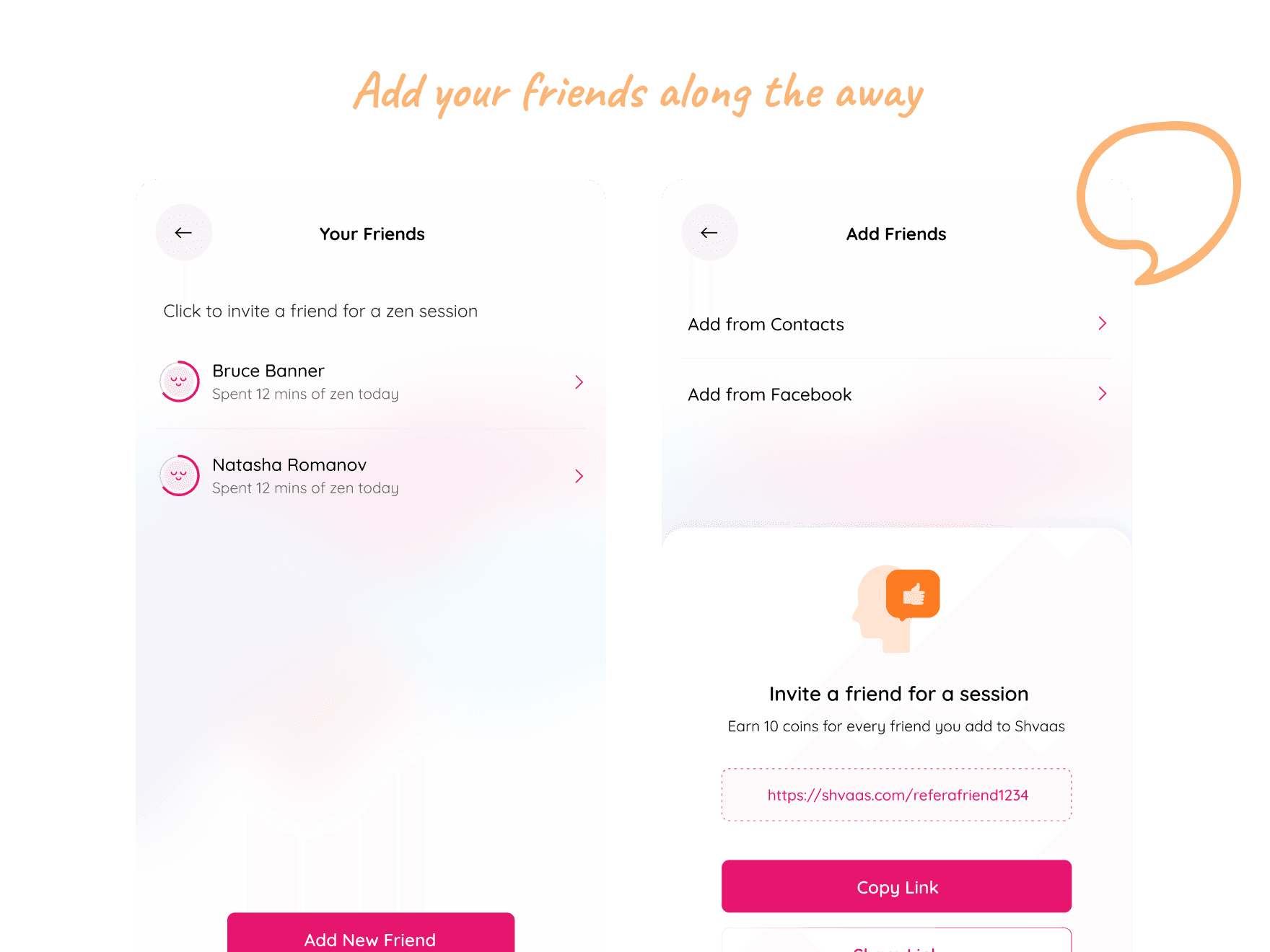
Together in tranquility
Meditation can feel difficult to start alone, especially for people who are new to the practice. We explored a shared meditation experience that allowed users to invite someone they trusted to join a guided session.
This introduced a social layer without turning meditation into a competitive or performative experience — the focus remained on creating a shared moment of calm.
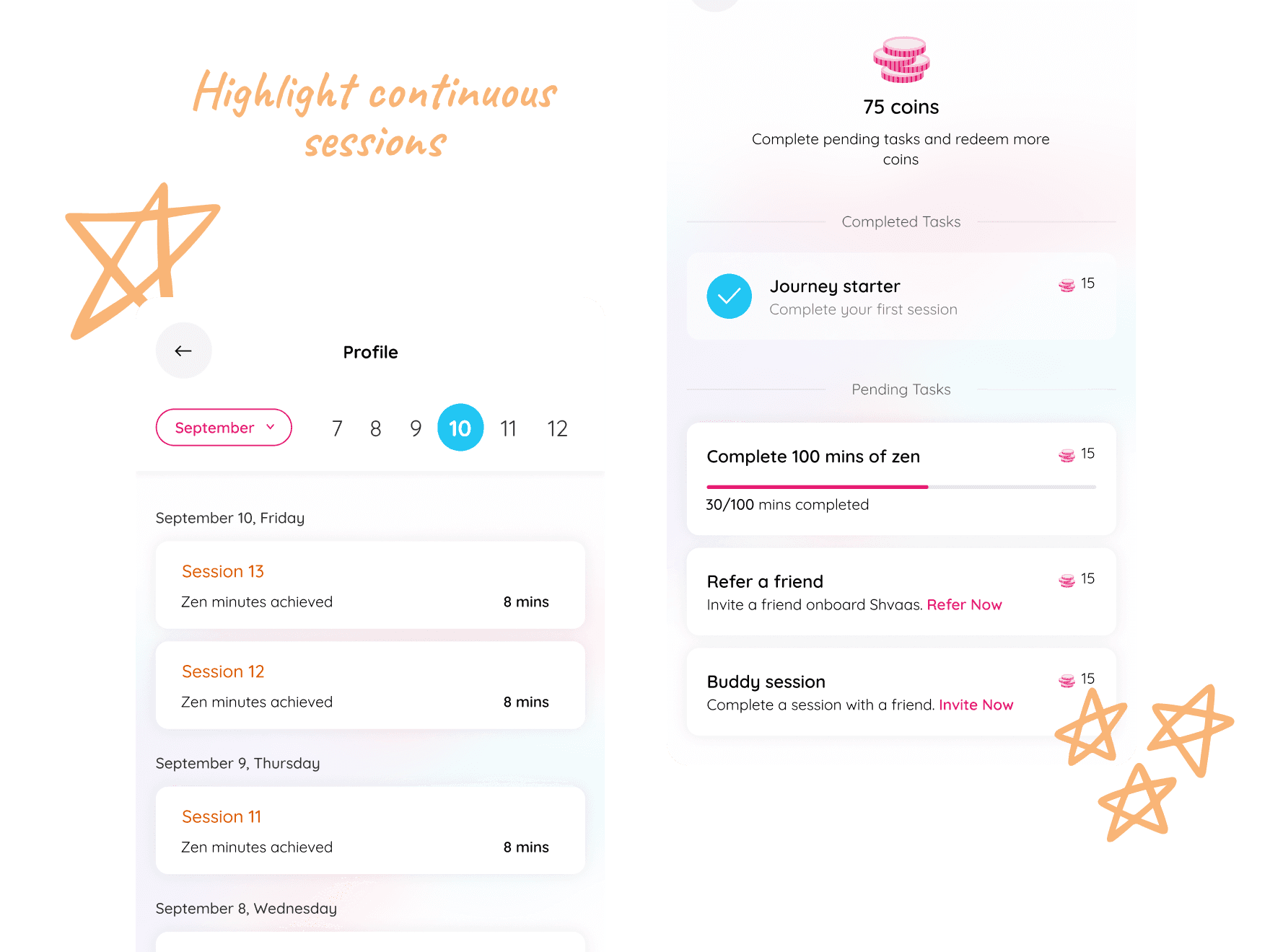
Keep tabs on your growth
Consistency is often harder than starting. We introduced lightweight progress tracking to help users see their practice over time and create a sense of continuity.
The challenge was to use habit-forming mechanics without making meditation feel like a productivity task. Streaks and progress therefore acted as gentle reinforcement rather than pressure to perform.
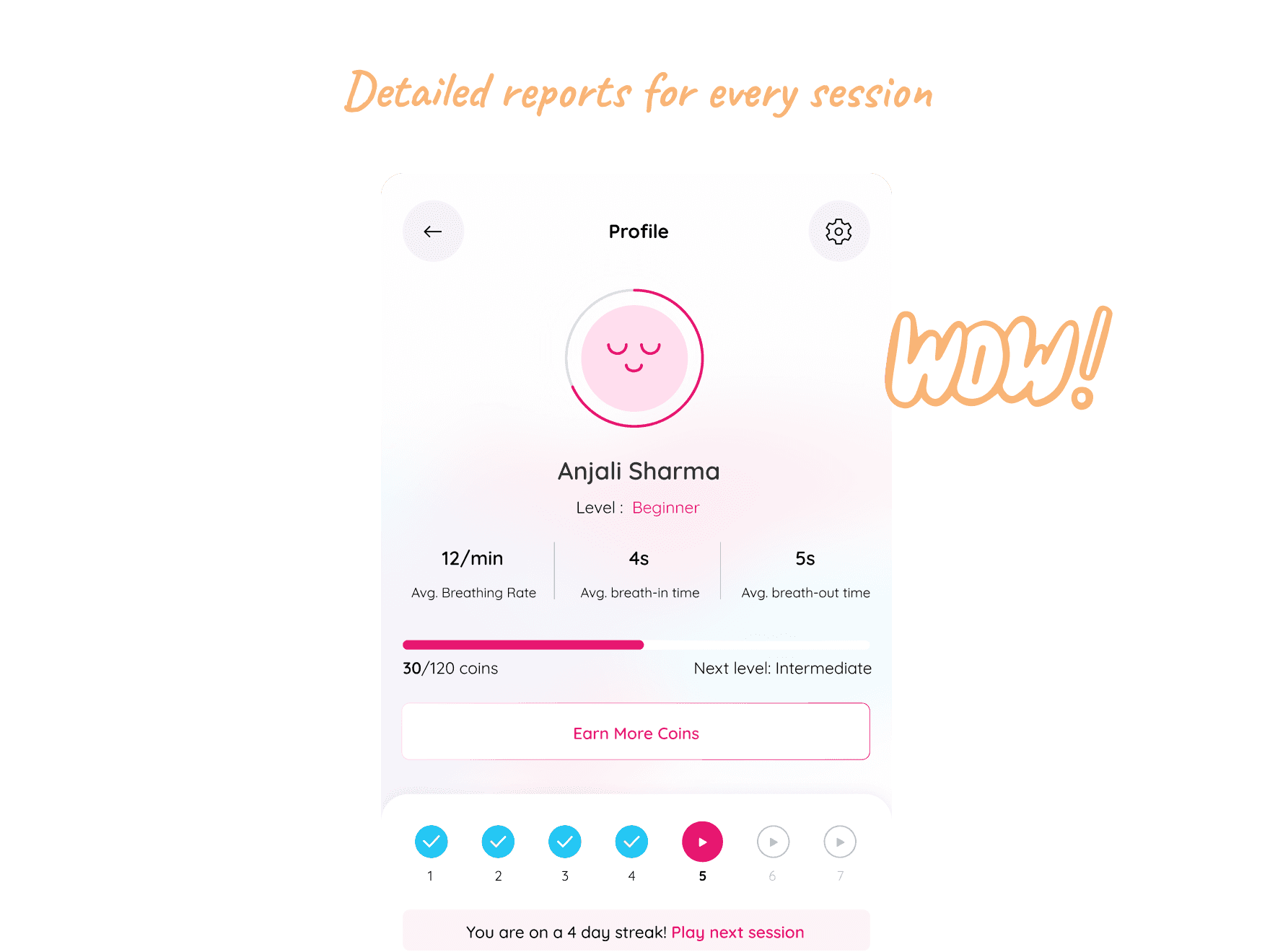
See how well you're doing
Breathing is at the centre of the Shvaas experience, so we wanted users to understand more than simply how often they meditated.
By visualising breathing patterns over time, the experience could help users recognise changes in their practice and build a deeper awareness of how their breathing influenced their meditation.
If I have to take one thing away from this experience…
People associate meditation with the feeling of releasing or setting themselves free, being in a place of serenity, and experiencing tranquility. It was a challenge to design a simple and effective interface, the app narrows down all the user’s basic needs for meditation, making it extremely easy to navigate within – without having them to really sit and think about using the app.
It was interesting to learn that focusing on certain colors can promote healing in specific parts of the body. Color visualization can be a powerful tool in meditation due to the link between the seven colors of the light spectrum and the seven chakras.
Designed at https://www.humanx.io/