Wagr
Designing a Smarter Petcare Ecosystem
DESIGNING FOR SCALE
Built to not box in the future
Navigation, IA and the design system were designed so new services could ship without redesigns.
THE PROJECT
From GPS tracker to petcare platform
Wagr started as a tracking device. Over three years we turned it into a connected ecosystem for vet care, shopping, records and everyday guidance.
THE problem
Petcare was scattered
Trusted vet advice was hard to access, everyday care lived across five different apps, and everything was reactive. Pet parents had to go looking instead of being guided.
THE outcome
One connected place for petcare
Digital vet care validated as the entry point. Healthcare, commerce and records connected in one place. A pet profile that became the foundation for personalisation.
THE PROJECT
Senior Product Designer
First designer on the product.
Product Strategy • UX Research • Product Design • Design System • Prototyping
The approach
Three phases, in order
Each one validated before the next.
01
Trust
TeleVet consultations
↓
02
Engagement
Everyday petcare
↓
03
Intelligence
Personalisation
↓
FACTS
Evolving Wagr from a GPS tracking product into a connected petcare ecosystem through strategic product design.
Building More Than Just Another Pet App
Wagr started as a GPS tracking solution designed to help pet parents keep their dogs safe. While the product solved an important problem, conversations with users revealed that tracking represented only a small part of the pet parenting journey.
From booking veterinary appointments and choosing the right food to learning about behavioural changes or finding trustworthy advice, pet parents relied on multiple disconnected products to care for their pets.
Rather than continuing to build around hardware, Wagr saw an opportunity to become a digital-first petcare platform that could support pet parents through every stage of their journey.
The challenge was to evolve Wagr into a connected petcare platform that could support users throughout their entire journey, from urgent veterinary consultations to everyday pet parenting.
Over three product phases, we validated digital healthcare, expanded into a broader ecosystem, and introduced personalised experiences designed to make petcare more proactive.
Shaping the Product Roadmap
Beyond designing interfaces, I worked closely with the founders to identify product opportunities, prioritise features, define MVPs, and establish scalable design patterns that could support the platform as it evolved.
Across three product phases, my work spanned research, product strategy, interaction design, visual design, prototyping, and building a flexible design system that could accommodate future growth.
Research revealed that pet parents faced three recurring challenges.
Accessing trusted veterinary care often involved long wait times, travel, or limited availability.
Everyday petcare was fragmented across multiple apps, websites and communities.
Most products were reactive, requiring users to search for information instead of providing timely guidance.
This presented an opportunity to build a platform that simplified petcare through trusted, connected and personalised experiences.


Why We Built in Phases
Building an entire petcare ecosystem from day one would have been difficult to validate and overwhelming for users.
Instead, we deliberately sequenced product investments across three phases, allowing each release to solve a distinct user problem while laying the foundation for what came next.
Phase 1: Building Trust Through Digital Healthcare
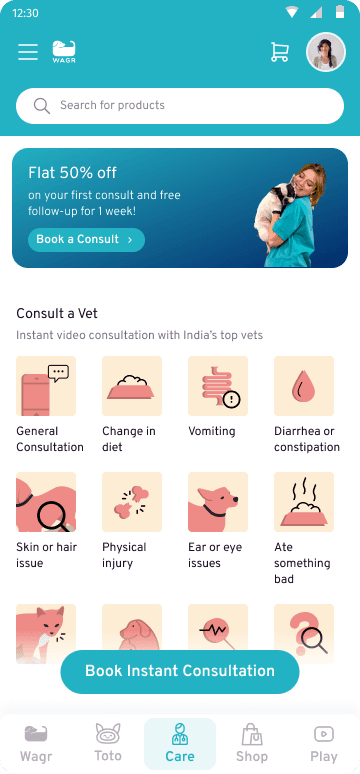
The first product investment focused on solving one of the biggest challenges for pet parents—access to trusted veterinary care.
Instead of attempting to solve every aspect of petcare at once, we started with TeleVet consultations. This allowed Wagr to establish credibility, reduce friction in accessing professional advice, and validate digital healthcare as the platform's entry point.
Product Goal
Create an accessible and trustworthy digital consultation experience that gives pet parents confidence to seek veterinary advice earlier while establishing Wagr as a reliable healthcare companion.
Key contributions
As the first designer on the product, I partnered closely with the founders to define the MVP and establish the foundation for Wagr's transition into digital healthcare. My focus was on validating the product direction and creating a scalable structure that could support the platform's future evolution.
Conducted user and market research to understand challenges in accessing veterinary care.
Defined user flows and information architecture for the consultation journey (MVP along with future possible roadmaps).
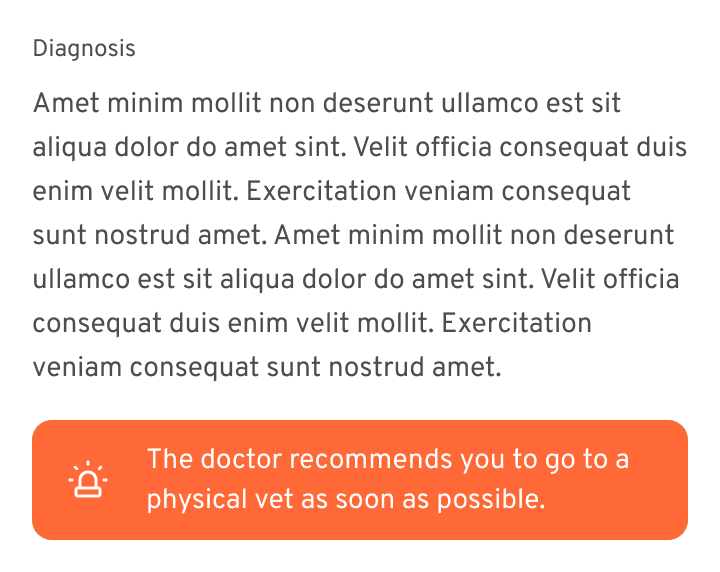
Designed the end-to-end TeleVet booking and consultation experience.
Collaborated with engineering to ensure a smooth implementation of the MVP.
Product KPIs
↑ Consultation booking conversion
↑ Consultation completion rate
↓ Average booking time
↑ First-time consultation bookings
↑ User satisfaction (CSAT/NPS)
Key outcomes
Simplified the consultation journey
Reduced friction in accessing veterinary care
Created the foundation for long-term engagement


Phase 2: Expanding Into Everyday Petcare
Healthcare solved an important problem, but it wasn't enough to keep users engaged every day.
Research showed that pet parents continued switching between different platforms for shopping, education, and community support. Phase 2 focused on bringing these fragmented experiences together into a single ecosystem.
Product Goal
Increase everyday engagement by connecting healthcare, learning, commerce, and community into one seamless product experience.
Key contributions
With the MVP validated, my focus shifted towards expanding Wagr into a connected petcare ecosystem. Beyond designing individual features, I worked on defining a scalable product architecture that could support multiple services while maintaining a cohesive user experience.
Established the visual language and scalable design foundations for the platform.
Identified opportunities and defined experience strategy to increase everyday engagement beyond consultations.
Designed scalable navigation and information architecture to support product expansion.
Created reusable design patterns that could accommodate future services.
Worked with stakeholders to prioritise features based on user value and business goals.
Product KPIs
↑ Cross-feature adoption
↑ Weekly active users
↑ Repeat sessions per user
↑ Community engagement
↑ 30-day retention
Key outcomes
Increased opportunities for repeat engagement
Connected healthcare with everyday petcare
Strengthened cross-feature adoption


Phase 3: Creating a More Intelligent Product
With the ecosystem established, the next challenge was making the experience feel increasingly personal over time.
Instead of expecting users to search for information or remember routine care, Wagr began using pet profiles and behavioural data to deliver timely recommendations, reminders, and insights.
product goal
Reduce cognitive effort by delivering personalised experiences that anticipate user needs rather than simply responding to them.
Key contributions
As the platform matured, my focus shifted towards personalisation and intelligent experiences. I explored how AI and contextual data could simplify decision-making, proactively support pet parents, and make the product more valuable over time.
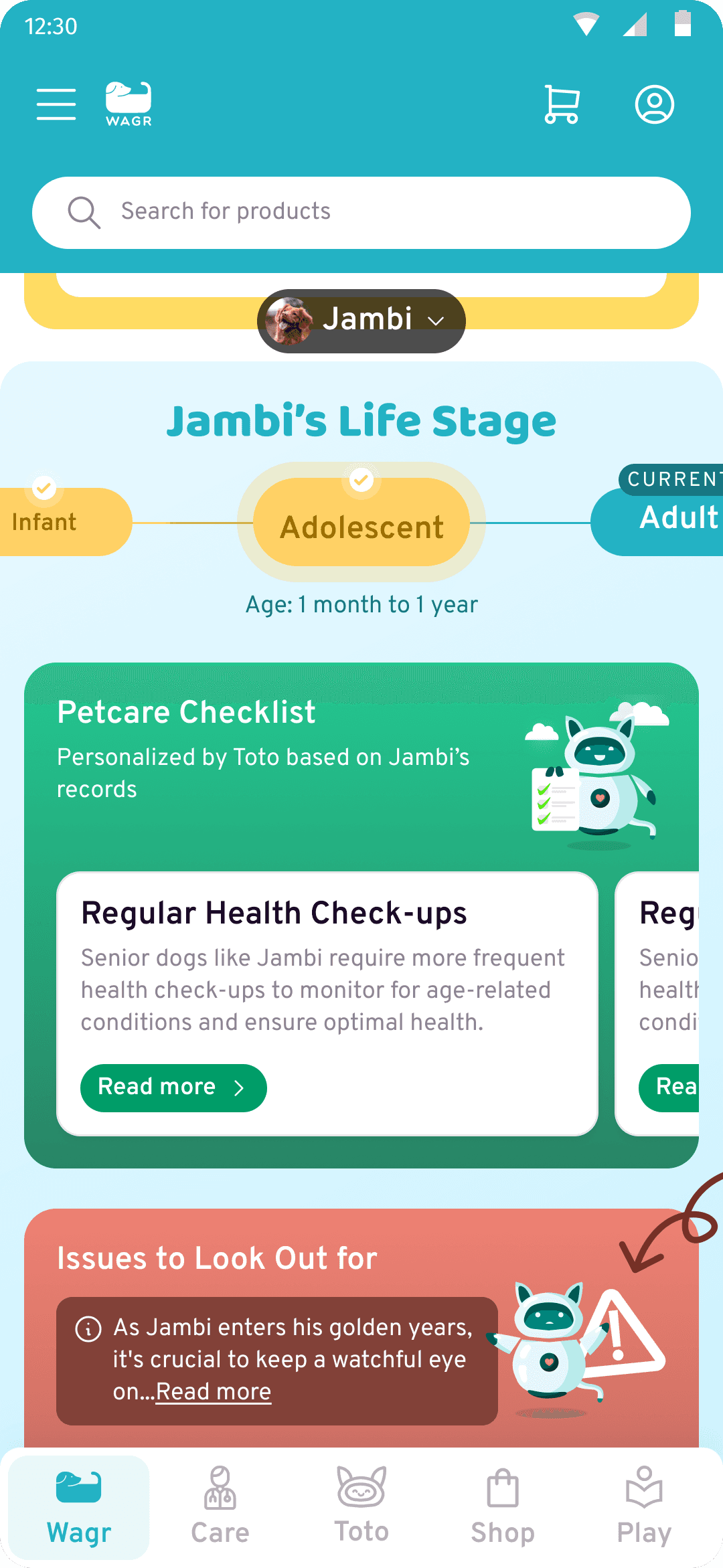
Designed a comprehensive pet profile as the foundation for personalisation.
Created AI-powered experiences tailored to each pet's life stage, health history, and routines.
Designed personalised insights, reminders, and contextual recommendations.
Balanced automation with user control to build trust in AI-assisted experiences.
Continued evolving the design system to support increasingly complex product capabilities.
Product KPIs
↑ Recommendation CTR
↑ Reminder engagement
↑ Recommendation-driven conversions
↑ Repeat engagement
↑ Multi-feature adoption
Key outcomes
More relevant recommendations
Proactive petcare reminders
Personalised experiences powered by user context




Designing for Scale
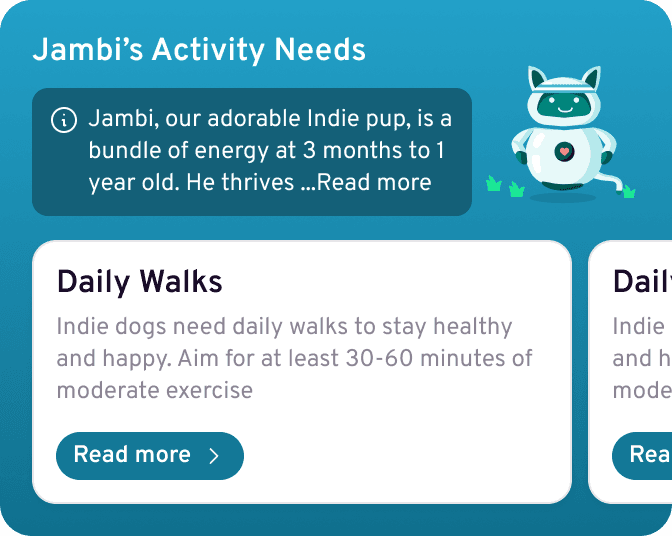
One of the biggest design challenges wasn't solving today's problems—it was ensuring today's solutions wouldn't limit tomorrow's product direction. Navigation, information architecture, design systems, and interaction patterns were intentionally designed to accommodate future services without requiring major redesigns.
Key Learnings
Designing Wagr reinforced that successful products aren't built by shipping more features—they're built by solving the right problems at the right time.
By validating trust through healthcare before expanding into everyday petcare and personalisation, the product was able to evolve naturally while maintaining a cohesive experience for users.
There’s more to the story than what’s on this page. Reach out at anjalidarbha.work@gmail.com if you’d like to see the full case study.
Designed at https://hyperlycheelabs.com